Qure
Smart hospital queue & patient flow management platform
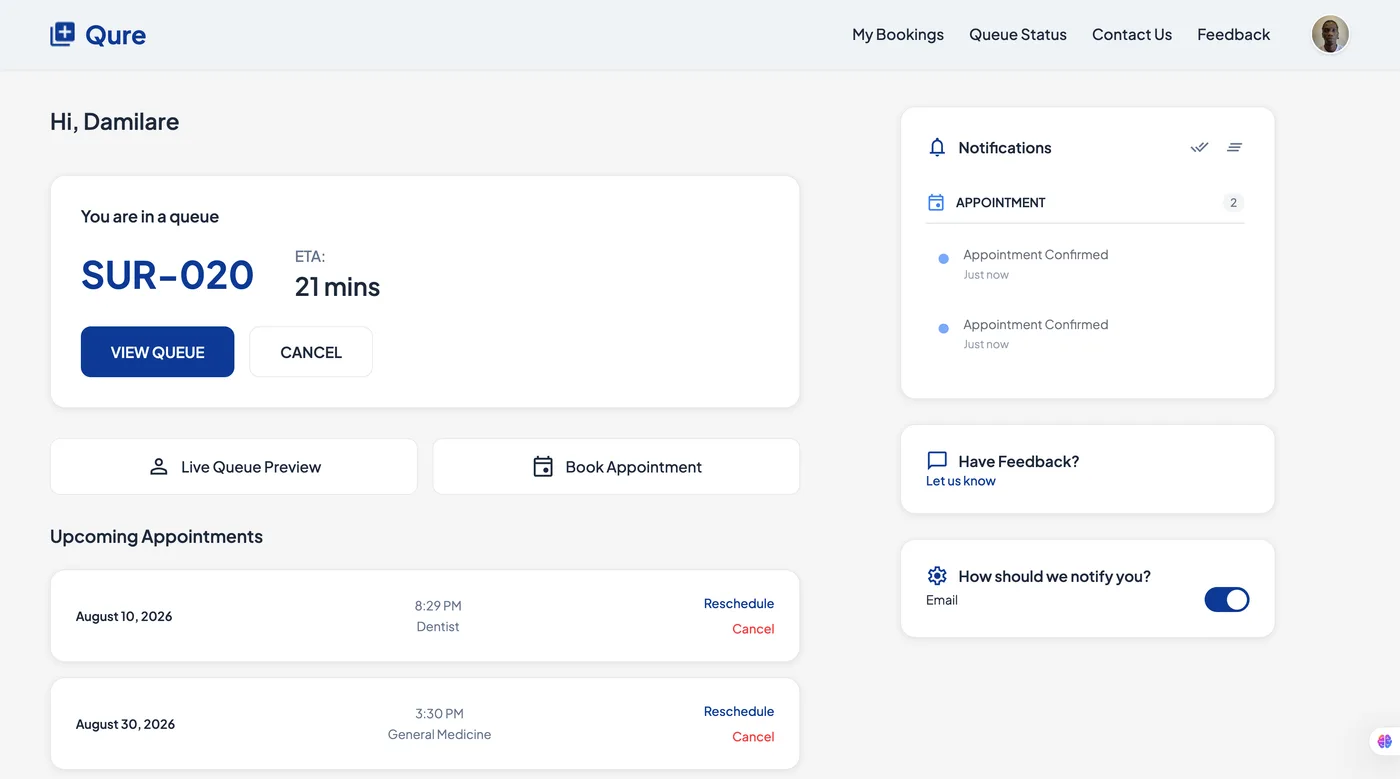
A multi-hospital queue and patient flow management platform that helps hospitals reduce waiting times, improve operational visibility, and streamline the entire outpatient journey — from appointment booking to consultation.
01 — The problem
Fragmented Systems & Long Wait Times
Many healthcare facilities still rely on manual tracking or isolated software that doesn't communicate. This leads to opaque queue lengths, overcrowded waiting areas, and a poor patient experience. Patients often face hours of unpredictable waiting without real-time updates, while hospital management lacks the data to optimize staff allocation.
02 — The solution
Centralizing the Outpatient Experience
Qure creates a unified ecosystem where every step of the journey is tracked and optimized. From the moment a patient books an appointment to their final consultation, the system ensures transparency for both patients and healthcare providers.
Smart queue management
Automated sorting based on priority, appointment type, and real-time doctor availability.
Waiting area management
Real-time occupancy tracking to prevent overcrowding and manage seat allocation effectively.
Hospital-wide announcements
Centralized digital signage control for paging patients and broadcasting urgent updates.
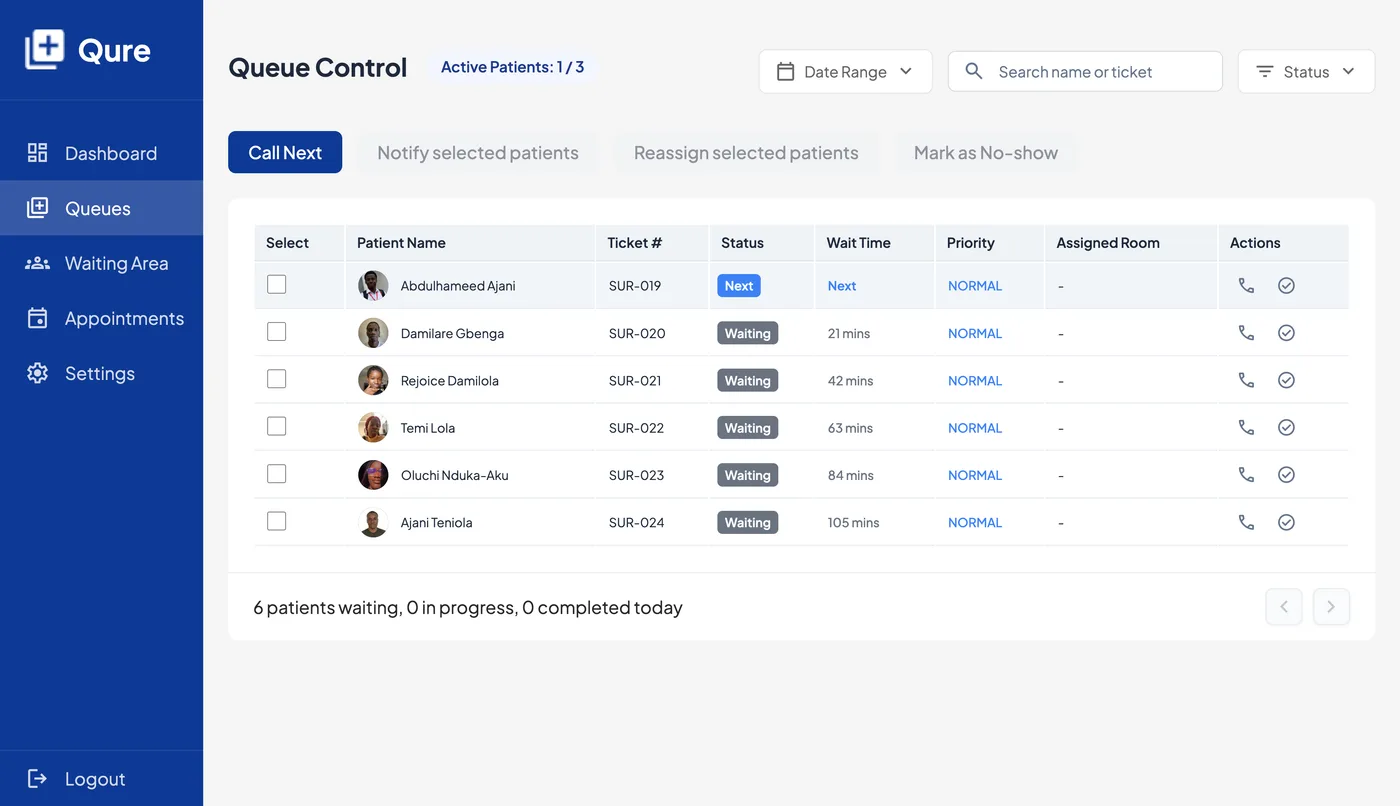
Patient queue dashboard
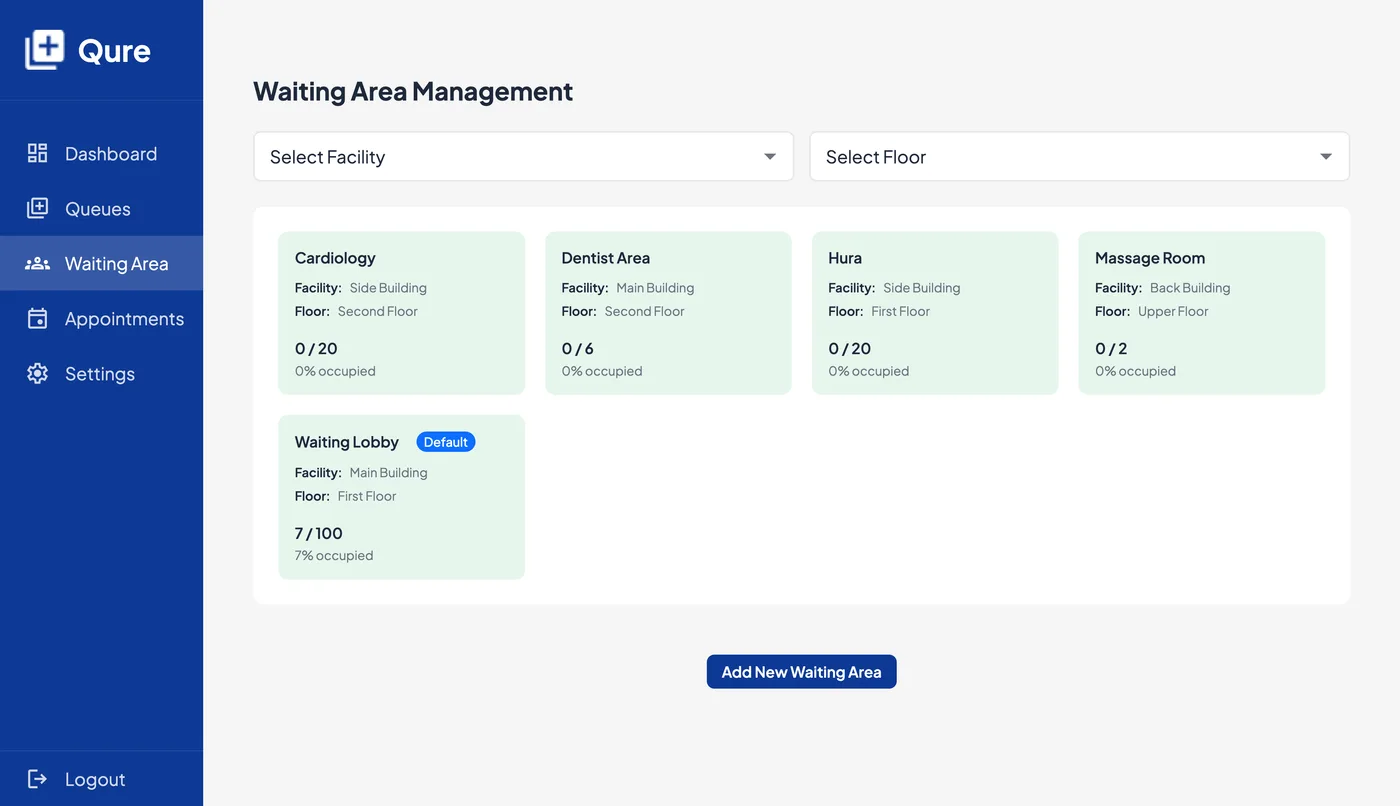
Waiting room management
03 — Architecture
Architecture and Technical Depth
The platform is built on a robust Node.js foundation, utilizing Express for a RESTful API architecture. Security is handled via JWT authentication with hierarchical role-based access control. Data integrity is maintained through Prisma ORM, ensuring consistent schemas across MongoDB.
04 — Core features
Precision at Every Step
Appointment management
Full CRUD for patient appointments with conflict detection and automated rescheduling logic.
Queue management
Dynamic token generation and real-time status updates for outpatient flow control.
Waiting area management
Intelligent seat assignment and occupancy monitoring to maintain safety protocols.
Analytics and reporting
Operational dashboards visualizing peak hours, average wait times, and staff efficiency.
Announcements
Automated voice and visual cues to notify patients when their consultation is ready.
Patient management
Centralized patient profiles with historical visit logs and upcoming schedule integration.
05 — Challenges and what I learned
Complexity in Real-time Systems
Synchronization
Managing state across multiple client instances (Doctors, Staff, and Public Displays) required a robust event-driven approach to ensure token numbers never desynced.
Occupancy calculation
Developing algorithms to predict and calculate actual occupancy in real-time, considering 'no-shows' and varying consultation lengths.
Multi-tenancy
Structuring the database and API to support multiple separate hospital entities on a single instance while guaranteeing total data isolation.
06 — Results
System Impact
4
User roles
Live
Real-time analytics
Backend validation covers hospital ownership, queue integrity, waiting area capacity, appointment lifecycle, doctor assignment, and duplicate prevention.
Have a problem like this one?
I help social enterprises and modern startups build robust, real-time digital solutions that scale.